I started drinking coffee when I was in my early 20’s, when I finally tasted coffee that wasn’t instant. My parents had fallen for the 1960’s instant coffee craze, apparently believing it was, in fact, tasty. Their coffee-like choice was Folgers, though we never saw the jar. My mother painstakingly meted it out into a little glass cannister with an attached right-sized wooden spoon, sitting in the middle of the kitchen counter, ready for the next appalling cup.
It tasted like beef bouillon. So I did not drink coffee until I moved out.
My first apartment was in an old house. There were four units and when I arrived, the house was already thriving as a commune. I met Toni the first week my son, Jonathan, now 5, stayed over. She was returning him. He’d gone to her apartment complaining that his mother did not feed him. Suspecting that might not be true, she waited until 9 to let me sleep and then ported him across the hall.
Jonathan last complained that I hadn’t made him breakfast when he was 54. Children do not get over some things.
But Toni taught me how to make coffee in a Chemex.
Drip Coffee
I like drip best, but the next runner-up is the French Press in the next section.
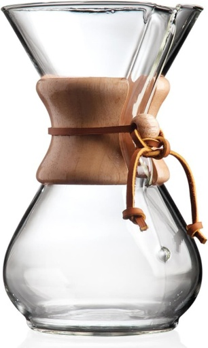
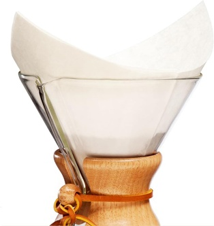
Chemex 6-cup Coffee Maker
The name Chemex is pretty apt, as this drip coffeemaker looks a lot like something from chemistry class. This is a six-cup coffeemaker and they make both 8- and 10-cup models too. The filter goes into the top, with the grounds in it, and you pour water over the grounds, creating coffee in the bottom. It has never made a bad cup of coffee for me.
On the Chemex site (chemexcoffeemaker.com), you can still buy a five-cup handblown version. Toni was right in 1975: The handblown ones are sturdier. Pricier, for sure. This Amazon verson is the 6 cup and not a lot to pay for great coffee.
Open for more details
Chemic coffeemakers take folded cones of paper for their filters. The filter sits in the top part of the glass carafe, where you put your coffee grounds. You want to pour hot but preferably not boiling water onto your coffee grounds in two passes. In the first pass, you are wetting the grounds doing what one pretentious copywriter from the 70’s called bursting the flavor crystals.
After that has sunk in, about 45 seconds, you follow with more water. In a circular motion, pour around the edges and circle to the center then circle back out again. For regular coffee, you’ll make a third pass.
You discard the filter after using it. Checmex sells a little glass lid for the coffeemake that will keep your coffee warmish. If you have a gas stove, put the chemex over the pilot light. If you don’t, I wouldn’t put the pot directly on an electric burner. Rather, I’d invest in a thermos pot to keep the remainder in.
There are also many other auxilliary items like brushes to clean the unit, both on Amazon and on the Chemex Coffeemaker site.
French Press Coffee
I find drip better rounded, but a French Press is also an excellent coffee maker. I use it when I want a bolder brew.
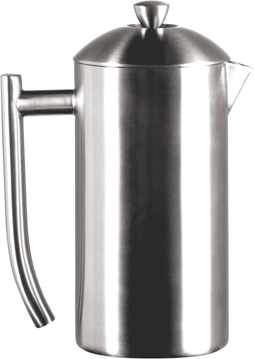
Frieling French Press
This is not the precise model that I have had for years, but it is close. It is not overly large and is perfect for making a single cup of coffee.
With a French Press, you grind your coffee much more coarsely than you do for drip. About 2 tablespoons in a coffee maker this size with 1 cups of almost boiling water will do the job. For iced coffee, I double the coffee to 4 tablespoons but keep the water the same. The knob on the top of the maker controls a press mechanism inside the device. You let the coffee stew with the plunger up for a about 4 minutes, and then you slowly lower the plunger to push the coffee grounds out of the liquid. I generally stop before rock bottom to minimize the grounds in the brew.
Iced vs Hot Coffee
After struggling with making my own iced coffee at home, I asked my favorite Starbucks barrista one day what the secret was. Turned out to be very simple. Just use half as much water for icied coffee as you do for hot, and pour the brew as soon as you can over a full cup of ice cubes. The melt does the rest.
You can cold brew if you want, but there’s a certain aftertaste that grows in the coffee if it is not poured hot over ice. Poured right away makes a smoother cup of iced coffee. You can also make coffee ice cubes, so that you can make regular coffee whether you’re having it iced or hot. Again, though, that cold coffee aftertaste is there.
Coffee Grinders
There are two types of grinders, blade grinders which sliced up the coffee beans the same way your food chopper slices up onions; and burr grinders which grind away at the coffee bean chipping it into smaller and smaller grains. Blade grinders are generally less expensive and have the reputation for being difficult to get a consistent grind from. They are also generally hand-held. Burr grinders, on the other hand, are generally automated and are better able to produce a consistent grain size without any effort from you.
Krups Grinder
Blade Grinder
Toni taught me how to use one of these and it stood me in good stead for most of my life. To use it, you place your coffee (generally enough beans to fill the interior stainless steel cup) into the machine and place the top back on. You hold your finger down on the button in the top and shake until you have reached the coffee coarseness you are after.
It is the shaking that will help you get consistently sized grains of coffee.
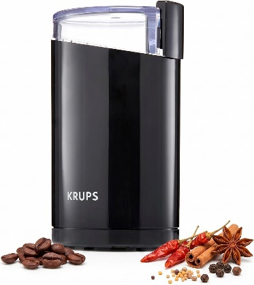
It can take a while to get adept with this hand grinder, but they last and last. I have only bought two of them in the 50 years I have made coffee with them several times a day until the last two years. The last one is still perfectly good. It is important to shake the grinder as you grind though.
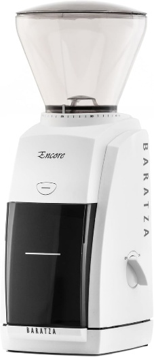
Baratza Encore Grinder
Automated Burr Grinder
If you are lazy, as I am, this is a great grinder. Many of the burr grinders I’d bought before had serious quirks. One of them slowly unscrewed the hopper from the grinder if you added a few too many beans. Another had a huge coffee drawer that required me to use two hands. And yet another just butchered the coffee.
So until I got this Baratzza Encore, I’d used that Krups most of my life.
Open for more details
You set the coarseness of the grind on the collar of this machine by twisting the coffee hopper while the machine is off. You can run it by pressing a button in the front of the appliance and holding it, or you can turn a little handle on the right side of the machine and then mentally time out how long you grind. I count to about 30, somewhat quickly and call it done. My coffee is always fine. It has a good sized hopper, but not so large your beans will go stale, and the drawer in which the grounds are deposited is easy to hold even for a small hand like mine. The only problem I have found with it is the little handle on the side that lets you turn on and turn off the grind sometimes falls off, leaving you in a panic to get it on and stop the grinding. Just takes awareness to avoid that.
The Barazza Virtuoso has a timer built in for extra cost.
Coffee Cups
I’m almost wholly an iced coffee devotee now, year round. It started when I had to walk to work at 5:30 in the morning. Nothing, not even those insulated paper sleeves and the little trap door, will make it pleasant to carry a boiling hot. overflowing payload of lava four blocks to the office.
I had my first iced coffee one December morning and never looked back.
Hot Coffee Mugs
There are several crucial requirements for a great (non-insulated) coffee mug. First it must have a good big handle that lets you hold it securely without having to touch the hot body of the cup. Second, it needs to be of a good size, certainly enough to pour a Starbucks grande into and then add cream. And, third, it wants a thin, porcelain-like lip so you’re in no danger of blubbing coffee down your chin.
Now, the Starbucks ceramic mugs meet these criteria. But so do these mugs and they are less commercialized, better looking, and travel better.
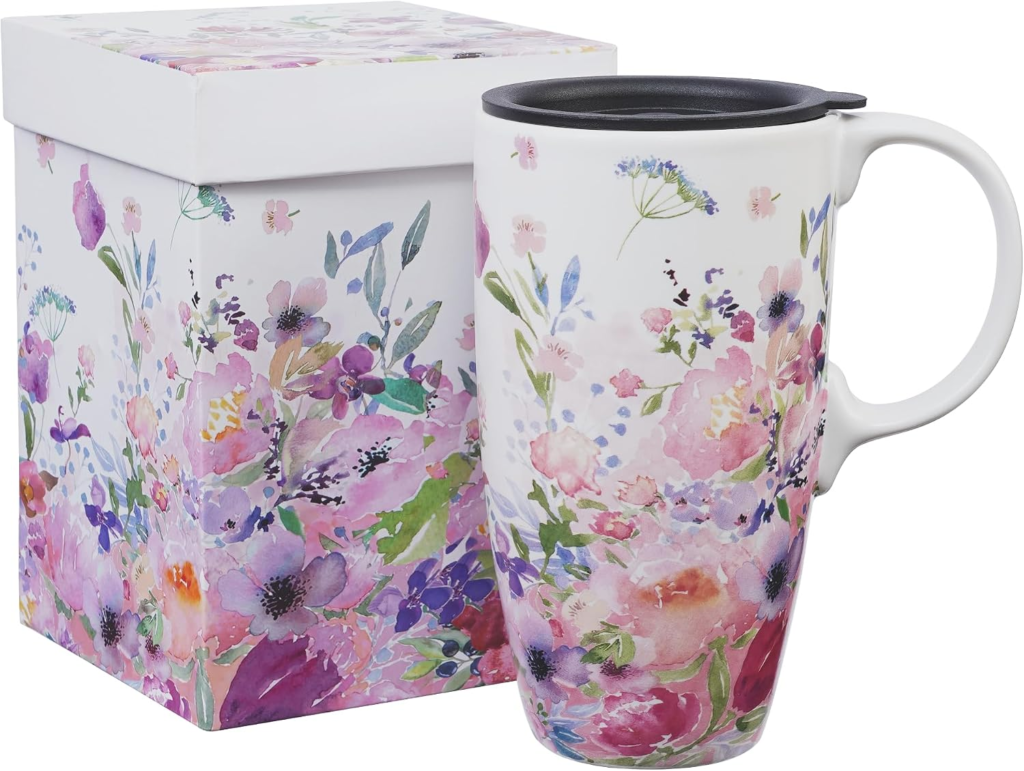
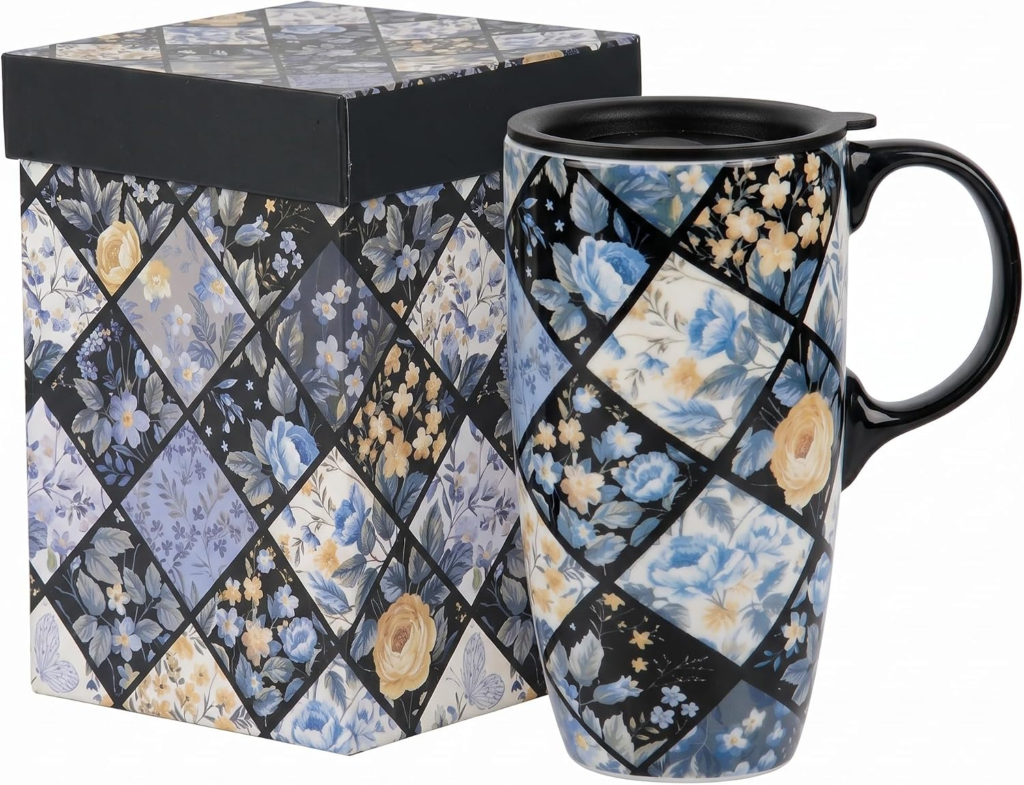
TopAdorn Ceramic Travel Mug
WIth a large handle, 17oz capacity, and good ceramic design with a porcelain feel, these cups meet and exceed the requirements. They come with a top that presses in place with a silicone seal. You press the slider to open and close, something that can be done with one free hand. More, the bottom of the cup is tapered to fit into a cup holder for driving. Bonus, they are lovely.
Insulated Cups
I buy these cups for iced coffee and can attest to the fact they keep the ice intact for almost 24 hours. The insulation is top notch. They are sold for both hot and cold beverages, however, which explains why they come without a stainless steel straw — something I’ve learned to live with.
Silicance 20 Ounce Tumbler
These cups fit well into cup holders but, more importantly, aren’t so top heavy that you have to worry about them on every curve. The containers are 20 ounce, which makes them good for a lot of ice plus a grande shot to make iced coffee. The double-wall steel construction reliably keeps the contents cold — or hot — for you to enjoy, without making the outside of the cup take on any temp of its own.
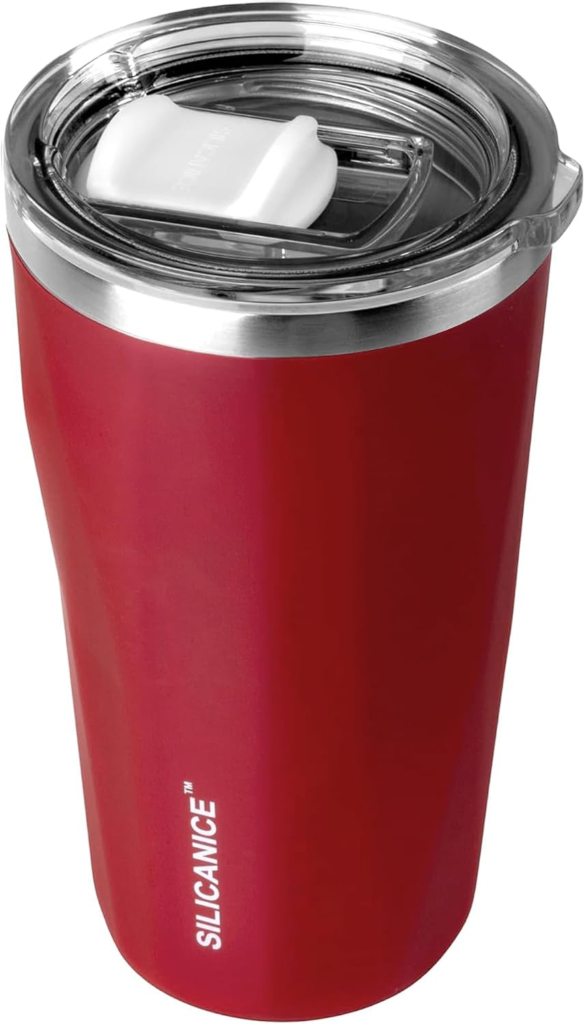
I’ve got three of these so that I’ve got enough to last three days before I run the dishwasher, or entertain a friend or two on the spot. While they are a bit pricey, I’ve found them very much worth it. There are several finishes, but I like the soft touch — I feel secure holding it.
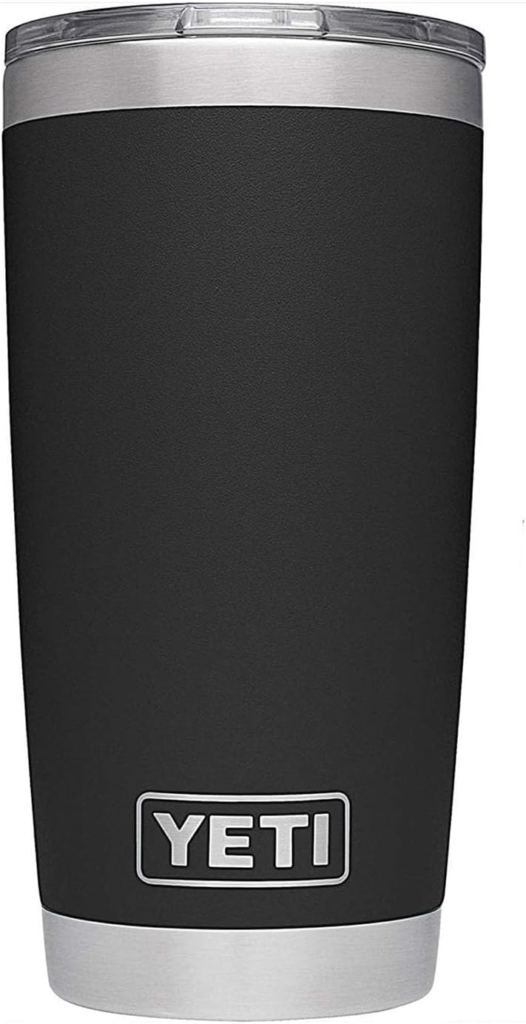
YETI 20 Ounce Tumbler
Silicance is hard marketing their tumblers to women, though I don’t see much of a difference. YETI is a great name and actually has more colors for the same basic thing. One difference is that the YETI’s go up to about $10 more than the Silicance in some colors, so watch that.
Otherwise, same double-walled construction and same need for your own bloody straw.
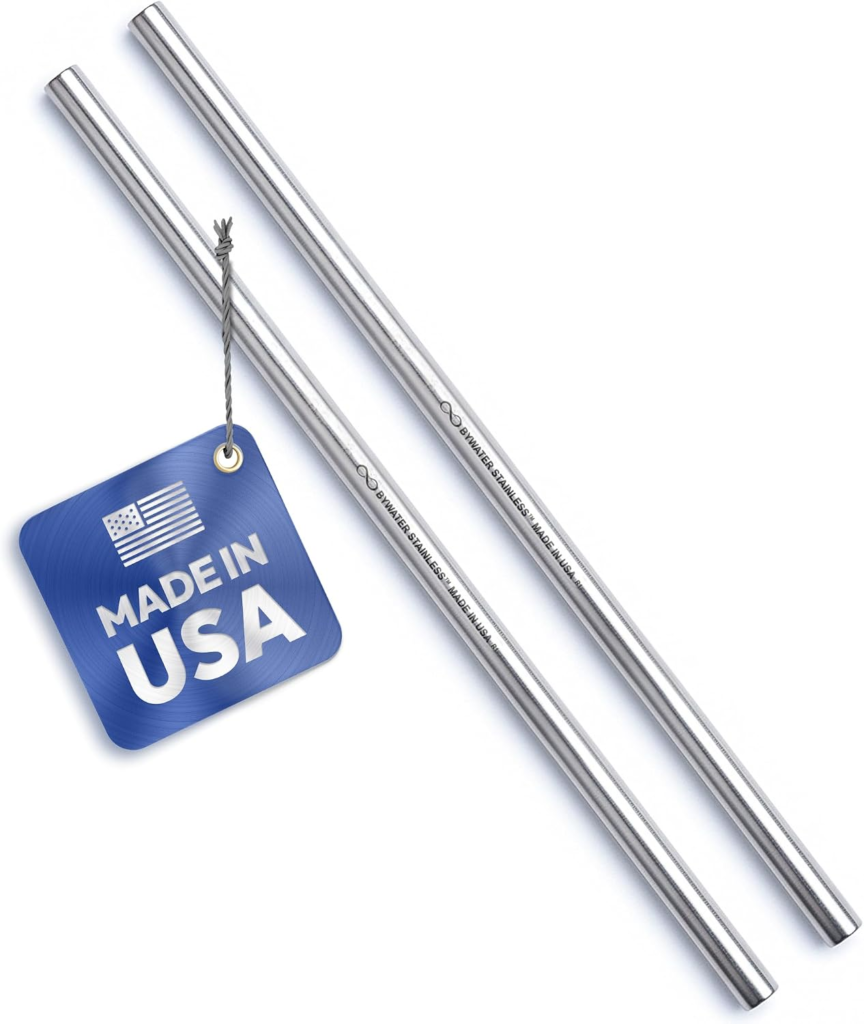
Bywater Steel Straws
These boys are expensive for straws, but they are wonderfully made. You will not need to replace them. Same size as the Starbucks straws so the perfect height for these tumblers.
Coffee Beans
In a world before Starbucks and some terrible coffees masquerading as upscale, there were only about ten different kinds of coffee beans. They broke down into Dark Roast, Medium Roast and Light Roast, with beans all basically mainstream arabica. French Roast was a heavy, greasy biting dark roast. Italian roast was similar, still dark and greasy but tending toward medium roast and not quite as oily. The gentle offset was Columbian which was generally medium roasted and not very oily at all. Adding volume was Antiguan, a medium roast with hearty flavor in the chocolate sort of range.
A beginner’s coffee blend was 1/4 Columbian, 1/4 Antiguan, and 1/2 French or Italian Roast. If you dripped that, you’d find yourself with a fairly stong but cocoa reminiscent rich pot of coffee. I drank it for years, until local coffee shops that worked off that paradigm started to die out and places like Starbucks started to take over.
I suppose I could still mix coffees, but it doesn’t seem worth it. I love Jamaican Blue Mountain, of course, but so does everyone else. And I like some of the far East coffees. But by far, my favorite bean is the Kenya AA bean. The AA means it is the top grade according to the Kenyan grading system. The best roast is medium to light, and the flavor is described as fruity, full, rich and silky. My coffee supplier of choice is a small place in New Jersey (I think). The place is Coffee Bean Direct and, no, no kickbacks here, just a great recommendation.