I’ve got mourning doves, cardinals, and grosbeaks that like platform feeders much better than hopper feeders. Mourning doves are simply too fat to accomplish sitting on one of those tiny perches, and cardinals and grosbeaks plain don’t like it. So in the summer, I set out two types of platform feeders.
Open Platform Feeders
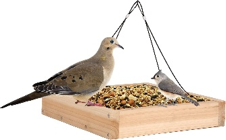
This Wild Wings Cedar Tray is my go-to open platform feeder. With a shorter hanging chain it stays closer to the umbrella dome I have over it to keep at least some of the rain and snow out. The base of it is wooden but with a plastic aerated bottom insert that lets water out and is easily removed for cleaning. Until it snows, this is the open feeder that I generally have available in the garden.
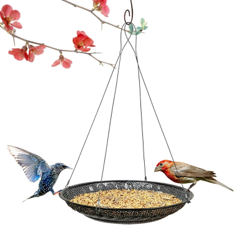
That said, I have a stainless steel basket, very like this one, that has lasted and lasted. Though the cedar tray shows no sign of rot or damage, I am pretty sure the stainless will last past my death. Though I have not tried it, this tray looks well made like the one I have.
Both of them stay clean. But both of them also invite those swarms of grackles, starlings, red wing blackbirds, and brown headed cowbirds that backyard feeders dread because they wipe out your seed in their numbers.
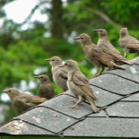
If you are under attack from a swarm of migrant birds, stop putting seed out in the open platforms for three days and most of those flocks will move on. Keep the small-bird feeders filled. In that picture, fledgling starlings. Lotsa.
I once had enough of a problem with grackles and their gang that they were clearing all the feeders in about an hour. In this link is the description of a fabulous automated feeder
that I was very excited to see was in production again.
BestNest Wild Bill Feeder
Covered Platform Feeders
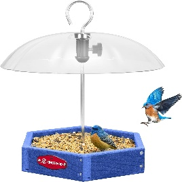
As well as open platform feeders, I keep two covered platform feeders of the same type, each with specialty seed in it and each with the top set tight to the base to limit the size of the birds that can get in to approximately the size of a bold cardinal. In one of these I keep safflower seeds, and in the other, shelled sunflower chips. The first delights sparrows, titmice, cardinals and rose breasted grosbeaks, while the second delights goldfinches, house finches, purple finches, those greedy grosbeaks again, and a surprising collection of woodpeckers. One of them is green the other blue. The feeders, not the woodpeckers.
Nothing will kill small birds faster than a festering platform feeder. Having found a dead goldfinch in a dirty feeder, I have sworn off the pretty, clear plastic feeders and gone to heftier types with mesh grates on the bottom for ventillation. No matter how expensive or sturdy a feeder is, what is most important is that it have a well-ventillated bottom to it. Stainless steel ruins the shiny, pretty feeder but saves the birds.
Unfortunately, this also includes most window platform feeders.
Window Platform Feeders
I just ordered this one for this winter so I’ve not yet got a review. Still, very excited to see it’s stainless steel.
These feeders attach to glass from the outdoors with suction cups. Because of that, you’re well advised to put them up early in the winter season while you can still stand to have your hands wet. Wet the suction cups and affix them by pressing onto a clean section of glass.
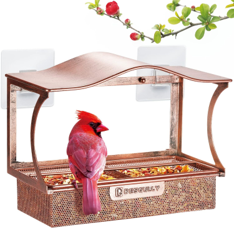
If you have squirrels, put this feeder as far away from any wood they can scale as possible. This feeder has a tray that lifts out. You push it up from the bottom and lift it out to fill it. Knock it against the house to knock any residue out before refilling. If seed has caked, wash the tray before reusing.
Bluebirds, I have discovered, only come to my bird feeders when it is actively snowing. But when they come, they look for open platform feeders like this one for the window.